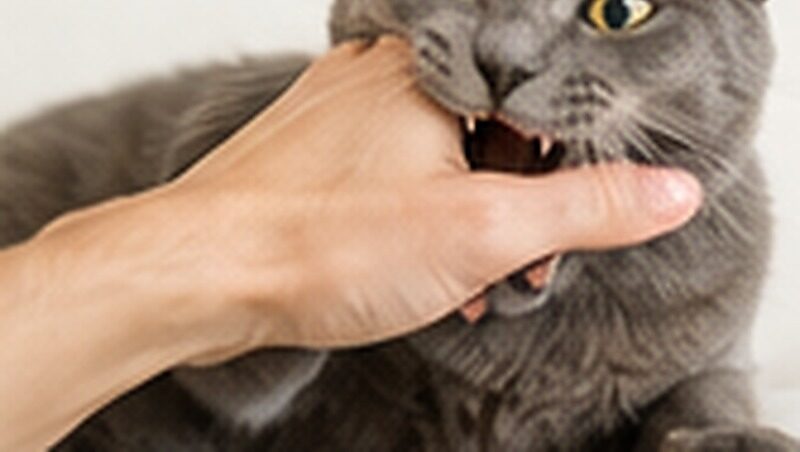
Your cat comes to you, purrs, and seems to invite petting — then without warning, bites your hand. It feels like a betrayal. But what appears to be random is actually a predictable pattern, and once you understand it, it becomes very manageable.
Why Does My Cat Bite When I Pet Her?
Petting — however loving it feels to you — may not feel the same way to your cat. Cats have individual preferences for touch: where, how firmly, how long, and how often. When petting exceeds the cat’s tolerance threshold, they use the most direct communication tool available: a bite.
The key insight is that this bite almost always follows a sequence of escalating, readable signals that most owners miss: tail flicking, skin rippling, ear rotation, turning to look at the hand, or a sudden stillness. Learning to read these signals is the foundation of resolving this behaviour.
- Force continued petting after the bite — the cat has communicated and the message must be respected
- Punish the cat for biting — this increases anxiety and can escalate aggression
- Restrain the cat while petting “to get them used to it” — this almost always backfires
Could Pain Be a Factor?
Yes. Cats experiencing pain — particularly arthritis, dental pain, or a recent injury — may become intolerant of touch near the affected area. A veterinary pain assessment should be included in any workup for petting-induced aggression.
Treatment and Prognosis
With owner education about feline body language and a structured approach to positive, consent-based interaction, complete resolution is the expected outcome. In most cases, no medication is required — though it may be considered if pain or anxiety is a contributing factor. The improvement in the cat-human relationship is usually rapid and deeply rewarding.