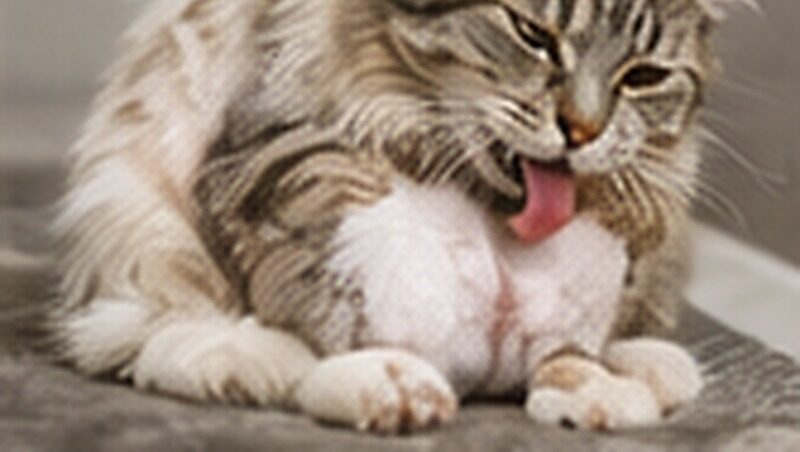
You’ve noticed your cat grooming far more than usual. Patches of fur are thinning or disappearing entirely — typically along the belly, inner thighs, or flanks. The skin isn’t broken, there’s no obvious rash, and your vet’s skin tests came back normal. This is a presentation we see regularly at Beecroft Behavioural Medicine: psychogenic alopecia.
What Is Psychogenic Alopecia?
Psychogenic alopecia is hair loss caused by compulsive, excessive grooming driven by psychological factors rather than skin disease. It falls under the broader category of feline compulsive disorders, and in Singapore’s predominantly indoor cat population, it is increasingly common.
Self-grooming releases endorphins and provides a soothing, self-regulating effect. In a stressed, anxious, or frustrated cat, this temporarily mood-lifting behaviour can escalate into an addiction-like compulsion.
Common Triggers in Singapore Cats
- Arrival of a new cat, dog, baby, or housemate
- Owner’s change in work schedule or long absences
- Relocation to a new home or renovation noise
- Conflict with another cat in the household
- Insufficient environmental enrichment in a small indoor space
Medical Rule-Out Is Still Essential
Even when skin tests are normal, dermatological causes (parasites, food allergy, fungal infection) and pain-related grooming must be thoroughly ruled out before a psychogenic diagnosis is confirmed. Beecroft works collaboratively with dermatology specialists when needed.
Treatment and Prognosis
Treatment involves environmental enrichment tailored to the individual cat, stress reduction strategies, behavioural modification, and — because the behaviour has a strong neurochemical component — medication to interrupt the compulsive cycle. Owners who commit to the treatment protocol can expect full or near-full coat regrowth and a much happier cat.