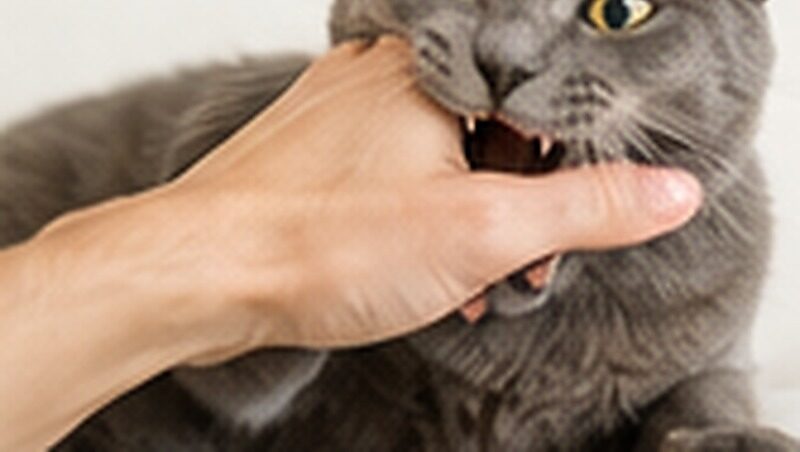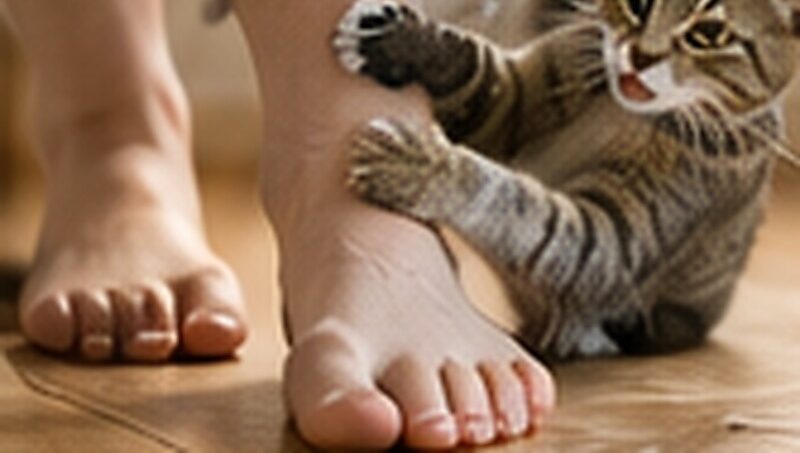
You walk down the corridor of your Singapore flat and suddenly — ambush. Your cat launches from behind a door or under the sofa to attack your ankles. It’s startling, sometimes painful, and completely baffling. But from your cat’s perspective, this is entirely logical — and deeply rooted in their natural biology.
Why Does My Cat Attack My Feet?
Felis catus is, at its core, a small carnivore whose entire physical and cognitive design is oriented around hunting. The predatory sequence — stalk, pounce, catch, bite, kill — is hardwired. For indoor cats in Singapore apartments, with no access to prey, this sequence gets redirected to whatever moves: feet, ankles, dangling hands, or trouser hems.
This is not aggression in the true sense — it is predatory play. But it can still cause injury, and it does indicate that the cat’s hunting needs are not being adequately met by their environment.
- Shout at or physically punish the cat — this increases arousal and escalates the behaviour
- Use your hands or feet as play objects — this directly reinforces foot-attacking
- Ignore the behaviour hoping it will resolve alone — it typically intensifies if hunting needs remain unmet
When Does This Need Professional Help?
If foot-attacking behaviour is worsening despite enrichment efforts, involves true bite pressure rather than soft play biting, or if the cat shows predatory behaviour toward children or vulnerable family members, a veterinary behaviourist consultation at Beecroft Behavioural Medicine is recommended. A targeted behaviour therapy programme delivers complete resolution for the vast majority of cats.